The Mystery of Chance
by Peter A. Jordan
At some time or another it's happened to all of us. There's that certain number that pops up wherever you go. Hotel rooms, airline terminals, street addresses -- its haunting presence cannot be escaped. Or, you're in your car, absently humming a song. You turn on the radio. A sudden chill prickles your spine. That same song is now pouring from the speaker.
Coincidence, you tell yourself. Or is it?
For most mainstream scientists, experiences like this, however strange and recurrent, are nothing but lawful expressions of chance, a creation -- not of the divine or mystical -- but of simply that which is possible. Ignorance of natural law, they argue, causes us to fall prey to superstitious thinking, inventing supernatural causes where none exist. In fact, say these statistical law-abiding rationalists, the occasional manifestation of the rare and improbable in daily life is not only permissible, but inevitable.
Consider this: from a well-shuffled deck of fifty-two playing cards, the mathematical odds of dealing a hand of thirteen specified cards are about 635,000,000,000 to one. (This means that, in dealing the hand, there exist as many as 635,000,000,000 different hands that may possibly appear.) What statisticians tell us, though, is that these billions of hands are all equally likely to occur, and that one of them is absolutely certain to occur each time the hand is dealt. Thus, any hand that is dealt, including the most rare and improbable hand is, in terms of probability, merely one of a number of equally likely events, one of which was bound to happen.
Such sobering assurances don't necessarily satisfy everyone, however: many see coincidence as embedded in a higher, transcendental force, a cosmic "glue," as it were, which binds random events together in a meaningful and coherent pattern. The question has always been: could such a harmonizing principle actually exist? Or are skeptics right in regarding this as a product of wishful thinking, a consoling myth spawned by the intellectual discomfort and capriciousness of chance?
Mathematician Warren Weaver, in his book, Lady Luck: The Theory of Probability, recounts a fascinating tale of coincidence that stretches our traditional notions of chance to their breaking point. The story originally appeared in Life magazine. Weaver writes:
All fifteen members of a church choir in Beatrice, Nebraska, due at practice at 7:20, were late on the evening of March 1, 1950. The minister and his wife and daughter had one reason (his wife delayed to iron the daughter's dress) one girl waited to finish a geometry problem; one couldn't start her car; two lingered to hear the end of an especially exciting radio program; one mother and daughter were late because the mother had to call the daughter twice to wake her from a nap; and so on. The reasons seemed rather ordinary. But there were ten separate and quite unconnected reasons for the lateness of the fifteen persons. It was rather fortunate that none of the fifteen arrived on time at 7:20, for at 7:25 the church building was destroyed in an explosion. The members of the choir, Life reported, wondered if their delay was "an act of God."
Weaver calculates the staggering odds against chance for this uncanny event as about one chance in a million.
Coincidences such as these, some say, are almost too purposeful, too orderly, to be a product of random chance, which strains somewhat to accommodate them. But then how do we explain them?
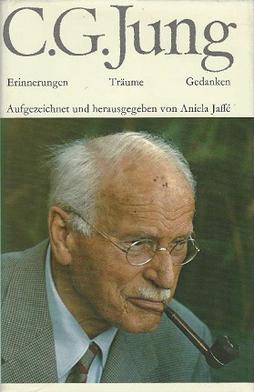
Psychologist Carl Jung believed the traditional notions of causality were incapable of explaining some of the more improbable forms of coincidence. Where it is plain, felt Jung, that no causal connection can be demonstrated between two events, but where a meaningful relationship nevertheless exists between them, a wholly different type of principle is likely to be operating. Jung called this principle "synchronicity."
In The Structure and Dynamics of the Psyche, Jung describes how, during his research into the phenomenon of the collective unconscious, he began to observe coincidences that were connected in such a meaningful way that their occurrence seemed to defy the calculations of probability. He provided numerous examples culled from his own psychiatric case-studies, many now legendary.
A young woman I was treating had, at a critical moment, a dream in which she was given a golden scarab. While she was telling me his dream I sat with my back to the closed window. Suddenly I heard a noise behind me, like a gentle tapping. I turned round and saw a flying insect knocking against the window-pane from outside. I opened the window and caught the creature in the air as it flew in. It was the nearest analogy to the golden scarab that one finds in our latitudes, a scarabaeid beetle, the common rose-chafer (Cetoaia urata) which contrary to its usual habits had evidently felt an urge to get into a dark room at this particular moment. I must admit that nothing like it ever happened to me before or since, and that the dream of the patient has remained unique in my experience.
Who then, might we say, was responsible for the synchronous arrival of the beetle -- Jung or the patient? While on the surface reasonable, such a question presupposes a chain of causality Jung claimed was absent from such experience. As psychoanalyst Nandor Fodor has observed, the scarab, by Jung's view, had no determinable cause, but instead complemented the "impossibility" of the analysis. The disturbance also (as synchronicities often do) prefigured a profound transformation. For, as Fodor observes, Jung's patient had -- until the appearance of the beetle -- shown excessive rationality, remaining psychologically inaccessible. Once presented with the scarab, however, her demeanor improved and their sessions together grew more profitable.
Because Jung believed the phenomenon of synchronicity was primarily connected with psychic conditions, he felt that such couplings of inner (subjective) and outer (objective) reality evolved through the influence of the archetypes, patterns inherent in the human psyche and shared by all of mankind. These patterns, or "primordial images," as Jung sometimes refers to them, comprise man's collective unconscious, representing the dynamic source of all human confrontation with death, conflict, love, sex, rebirth and mystical experience. When an archetype is activated by an emotionally charged event (such as a tragedy), says Jung, other related events tend to draw near. In this way the archetypes become a doorway that provide us access to the experience of meaningful (and often insightful) coincidence.
Implicit in Jung's concept of synchronicity is the belief in the ultimate "oneness" of the universe. As Jung expressed it, such phenomenon betrays a "peculiar interdependence of objective elements among themselves as well as with the subjective (psychic) states of the observer or observers." Jung claimed to have found evidence of this interdependence, not only in his psychiatric studies, but in his research of esoteric practices as well. Of the I Ching, a Chinese method of divination which Jung regarded as the clearest expression of the synchronicity principle, he wrote: "The Chinese mind, as I see it at work in the I Ching, seems to be exclusively preoccupied with the chance aspect of events. What we call coincidence seems to be the chief concern of this peculiar mind, and what we worship as causality passes almost unnoticed...While the Western mind carefully sifts, weighs, selects, classifies, isolates, the Chinese picture of the moment encompasses everything down to the minutest nonsensical detail, because all of the ingredients make up the observed moment."
Similarly, Jung discovered the synchronicity within the I Ching also extended to astrology. In a letter to Freud dated June 12, 1911, he wrote: "My evenings are taken up largely with astrology. I make horoscopic calculations in order to find a clue to the core of psychological truth. Some remarkable things have turned up which will certainly appear incredible to you...I dare say that we shall one day discover in astrology a good deal of knowledge that has been intuitively projected into the heavens."
Freud was alarmed by Jung's letter. Jung's interest in synchronicity and the paranormal rankled the strict materialist; he condemned Jung for wallowing in what he called the "black tide of the mud of occultism." Just two years earlier, during a visit to Freud in Vienna, Jung had attempted to defend his beliefs and sparked a heated debate. Freud's skepticism remained calcified as ever, causing him to dismiss Jung's paranormal leanings, "in terms of so shallow a positivism," recalls Jung, "that I had difficulty in checking the sharp retort on the tip of my tongue." A shocking synchronistic event followed. Jung writes in his memoirs:
While Freud was going on this way, I had a curious sensation. It was as if my diaphragm were made of iron and were becoming red-hot -- a glowing vault. And at that moment there was such a loud report in the bookcase, which stood right next to us, that we both started up in alarm, fearing the thing was going to topple over on us. I said to Freud: 'There, that is an example of a so-called catalytic exteriorization phenomenon.' 'Oh come,' he exclaimed. 'That is sheer bosh.' 'It is not,' I replied. 'You are mistaken, Herr Professor. And to prove my point I now predict that in a moment there will be another such loud report! 'Sure enough, no sooner had I said the words that the same detonation went off in the bookcase. To this day I do not know what gave me this certainty. But I knew beyond all doubt that the report would come again. Freud only stared aghast at me. I do not know what was in his mind, or what his look meant. In any case, this incident aroused his distrust of me, and I had the feeling that I had done something against him. I never afterward discussed the incident with him.
In formulating his synchronicity principle, Jung was influenced to a profound degree by the "new" physics of the twentieth century, which had begun to explore the possible role of consciousness in the physical world. "Physics," wrote Jung in 1946, "has demonstrated...that in the realm of atomic magnitudes objective reality presupposes an observer, and that only on this condition is a satisfactory scheme of explanation possible." "This means," he added, "that a subjective element attaches to the physicist's world picture, and secondly that a connection necessarily exists between the psyche to be explained and the objective space-time continuum." These discoveries not only helped loosen physics from the iron grip of its materialistic world-view, but confirmed what Jung recognized intuitively: that matter and consciousness -- far from operating independently of each other -- are, in fact, interconnected in an essential way, functioning as complementary aspects of a unified reality.
The belief -- suggested by quantum theory and by reports of synchronous events -- that matter and consciousness interpenetrate is, of course, far from new. What historian Arthur Koestler refers to as the capacity of the human psyche to "act as a cosmic resonator" faithfully echoes the thinking of Kepler and Pico. Leibnitz's "monad," a spiritual microcosm said to mirror the patterns of the universe, was based on the premise that individual and universe "imprint" each other, acting by virtue of a "pre-established harmony." And for Schopenhauer who, like Jung, questioned the exclusive status of causality, everything was "interrelated and mutually attuned."
Common among these various historical sources, as Koestler observes in his book, The Roots of Coincidence, is the presumption of a "fundamental unity of all things," which transcends mechanical causality, and which relates coincidence to the "universal scheme of things."
In exploring the parallels between modern science and the mystical concept of a universal scheme or oneness, Koestler compares the evolution of science during the past one-hundred-and-fifty years to a vast river system, in which each tributary is "swallowed up" by the mainstream, until all unified in a single river-delta. The science of electricity, he points out, merged, during the nineteenth century, with the science of magnetism. Electromagnetic waves were then discovered to be responsible for light, color, radiant heat and Hertzian waves, while chemistry was embraced by atomic physics. The control of the body by nerves and glands was linked to electrochemical processes, and atoms were broken down into the "building blocks" of protons, electrons and neutrons. Soon, however, even these fundamental parts were reduced by scientists to mere "parcels of compressed energy, packed and patterned according to certain mathematical formulae."
What all this reveals, then, is that there may be what Koestler refers to as "the universal hanging-together of things, their embeddedness in a universal matrix." Many ecologists already subscribe to this sense of interrelation in the world, what the ancients called the "sympathy" of life, and the numbers of scientists now converting to this world-view are beginning to multiply. Nobel Prize winner Ilya Prigione of the University of Texas at Austin is studying the "spontaneous formation of coherent structures," how chemical and other kinds of structures evolve patterns out of chaos. Karl Pribram, a neuroscientist at Stanford University, has proposed that the brain may be a type of "hologram," a pattern and frequency analyzer which creates "hard" reality by interpreting frequencies from a dimension beyond space and time. On the basis of such a model, the physical world "out there," is, in Pribram's words, "isomorphic with" -- that, the same as, the processes of the brain.
So, if the modern alliance evolving between quantum physicists, neuroscientists, parapsychologists and mystics is not just a short-fused phase in scientific understanding, a paradigm shift may well be imminent. We may soon not only embrace a new image of the universe as non-causal and "sympathetic," but uncover conclusive evidence that the universe functions not as some great machine, but as a great thought -- unifying matter, energy, and consciousness. Synchronous events, perhaps even the broader spectrum of paranormal phenomena, will be then liberated from the stigma of "occultism," and no longer seen as disturbing. At that point, our perceptions, and hence our world, will be changed forever.
source: strangemag.com



 Posts
Posts


